









ERP Software Companies in Bangalore: 10 Things to Check Before You Choose One
Choosing among ERP software companies in Bangalore is not simply a matter of comparing features, prices, or software demos. For a growing business, the ERP partner you select can influence financial visibility, inventory accuracy, production efficiency,…
What Will ERP Look Like in 2030? A Technology Roadmap for Business Leaders
ERP 2030 will look very different from the ERP systems many companies use today. Instead of simply recording transactions, future ERP software will increasingly help businesses understand what is happening, predict what could happen next, recommend the…
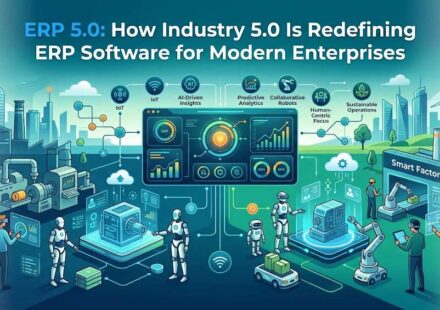
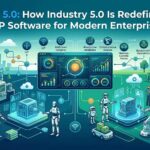
ERP 5.0: How Industry 5.0 Is Redefining ERP Software for Modern Enterprises
Businesses are facing growing pressure from changing customer demand, supply-chain disruptions, rising operational costs, workforce challenges and increasing sustainability expectations; therefore, traditional ERP systems that mainly record transactions…
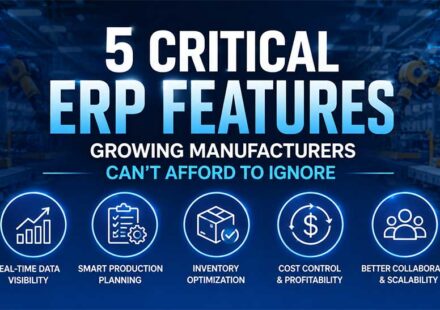
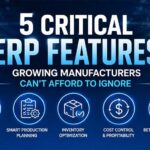
5 Critical ERP Features Growing Manufacturers Can’t Afford to Ignore
Manufacturing growth can create a difficult operational paradox: more orders generate more revenue potential, but they also create more production complexity. As order volumes increase, spreadsheets become harder to control, inventory information becomes…
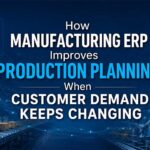
How Manufacturing ERP Improves Production Planning When Customer Demand Keeps Changing
A customer confirms a large order on Monday. By Wednesday, the required delivery date moves forward. Meanwhile, a critical supplier delays raw materials, one machine goes down, and another customer reduces its order. For many manufacturing companies,…
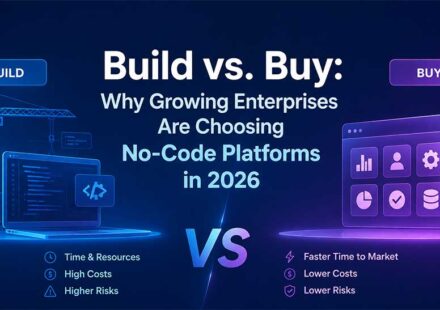
Build vs. Buy: Why Growing Enterprises Are Choosing No-Code Platforms in 2026
For a growing enterprise, the software decision is rarely as simple as “build or buy.” The real question is whether the business can keep adapting when processes change, customers expect faster service, regulations evolve, and technology teams are…
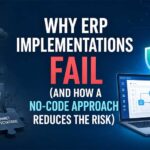
Why ERP Implementations Fail (And How a No-Code Approach Reduces the Risk)
ERP implementation is supposed to bring finance, operations, inventory, sales, purchasing, production, and reporting together. Yet many businesses discover that buying an ERP is easier than making it work. ERP implementation failure can occur when…
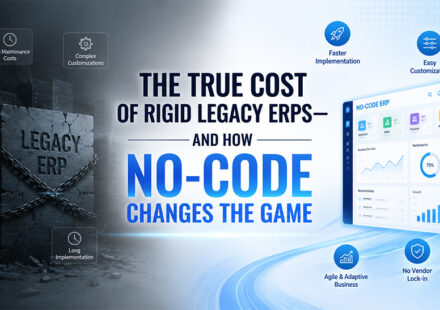
The True Cost of Rigid Legacy ERPs—And How No-Code Changes the Game
A legacy ERP rarely becomes expensive because of its original purchase price. Instead, the real cost appears years later through customization, maintenance, integrations, workarounds, slow reporting, upgrade difficulties, and the growing dependence on…
How No-Code ERP Cuts Implementation Time by 50% for SMBs
For a growing SMB, choosing an ERP is only half the decision. The bigger question is how quickly the business can start using it without disrupting sales, finance, inventory, production, purchasing, or customer operations. Traditional ERP implementations…
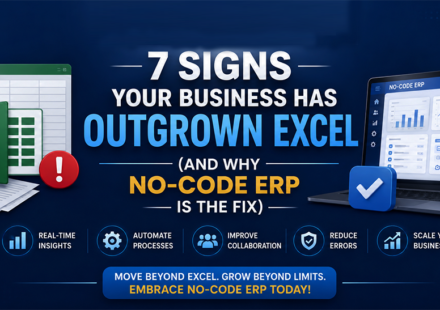
7 Signs Your Business Has Outgrown Excel (And Why No-Code ERP Is the Fix)
Excel is excellent when a business is small, transactions are manageable, and only a few people need access to operational data. However, as orders increase, teams expand, inventory becomes more complex, and management needs faster answers, spreadsheets…