
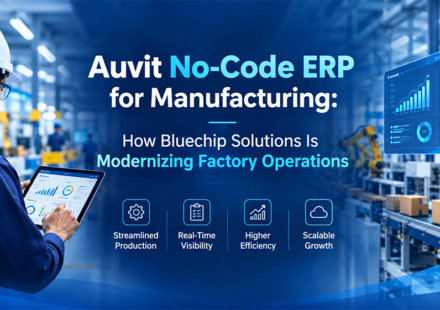
Auvit No-Code ERP for Manufacturing: How Bluechip Solutions Is Modernizing Factory Operations
Manufacturing companies rarely struggle because they lack software. More often, they struggle because the software they already use does not move at the same speed as the factory. Production teams may still depend on spreadsheets for planning. Purchase…
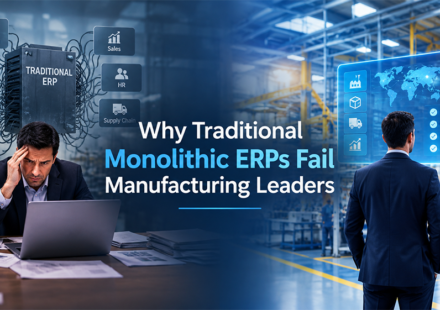
Why Traditional Monolithic ERPs Fail Manufacturing Leaders
Manufacturing leaders rarely replace a traditional monolithic ERP simply because they dislike the software. They replace it when the system starts limiting how the business operates. Production teams may need different workflows for different product…
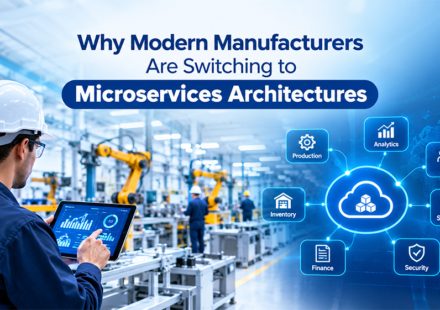
Monolithic vs. Composable ERP: Why Modern Manufacturers Are Switching to Microservices Architectures
A manufacturing company rarely changes its ERP because everything is working perfectly. More often, the problem starts with one department. Production needs real-time visibility. Finance needs accurate costing. Warehouse teams need faster inventory…
ERP Software for Food Manufacturing & Processing: The Complete 2026 Guide
Food manufacturers are dealing with a difficult combination of problems: fluctuating raw-material prices, short shelf lives, batch-level traceability, production wastage, quality checks, changing customer demand, inventory pressure and increasingly…
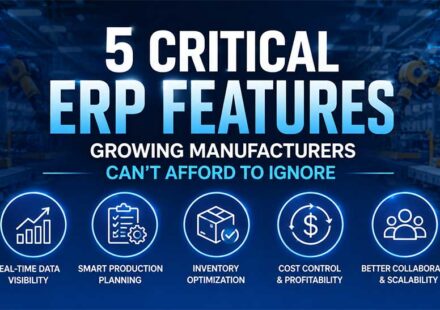
5 Critical ERP Features Growing Manufacturers Can’t Afford to Ignore
Manufacturing growth can create a difficult operational paradox: more orders generate more revenue potential, but they also create more production complexity. As order volumes increase, spreadsheets become harder to control, inventory information becomes…
How Manufacturing ERP Improves Production Planning When Customer Demand Keeps Changing
A customer confirms a large order on Monday. By Wednesday, the required delivery date moves forward. Meanwhile, a critical supplier delays raw materials, one machine goes down, and another customer reduces its order. For many manufacturing companies,…
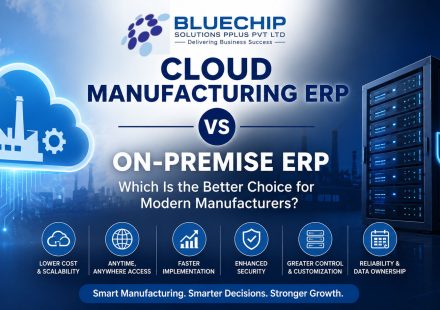
Cloud Manufacturing ERP vs On-Premise ERP: Which Is the Better Choice for Modern Manufacturers?
Manufacturing companies are under constant pressure to reduce production costs, improve efficiency, eliminate manual errors, maintain compliance, and deliver products faster than ever before. However, many manufacturers still struggle with disconnected…
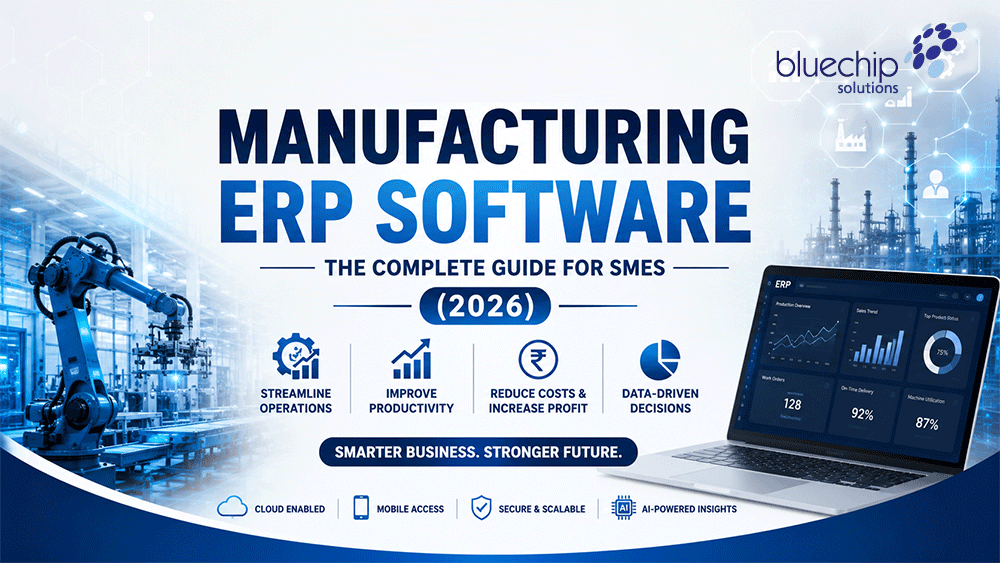
Manufacturing ERP Software: The Complete Guide for SMEs (2026)
Manufacturing businesses are under constant pressure to deliver faster, reduce production costs, maintain consistent quality, and respond quickly to changing customer demands. However, many small and medium-sized enterprises (SMEs) still rely on…
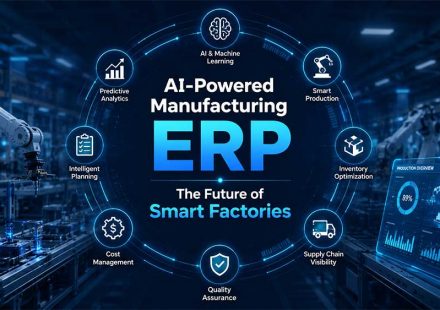
AI-Powered Manufacturing ERP: The Future of Smart Factories
Manufacturing businesses are under constant pressure to reduce production costs, eliminate downtime, improve product quality, and deliver orders faster than ever before. However, many manufacturers still rely on disconnected software, spreadsheets,…
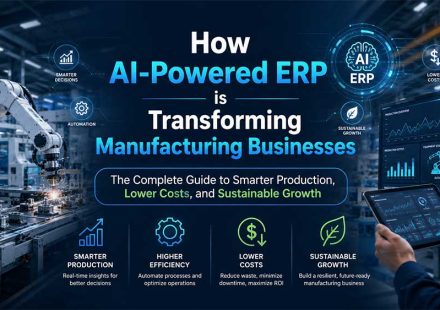
How AI-Powered ERP is Transforming Manufacturing Businesses: The Complete Guide to Smarter Production, Lower Costs, and Sustainable Growth
Manufacturing companies are facing increasing pressure to produce more with fewer resources while maintaining quality, reducing costs, and meeting customer expectations. Rising raw material prices, supply chain disruptions, labor shortages, unpredictable…