

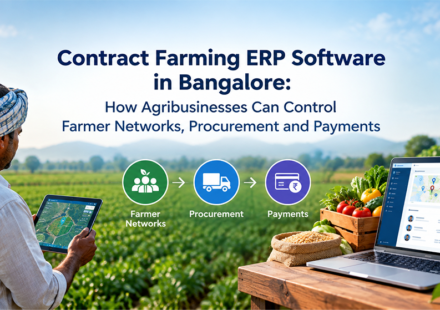
Contract Farming ERP Software in Bangalore: How Agribusinesses Can Control Farmer Networks, Procurement and Payments
Managing contract farming across hundreds of farmers is not just an agricultural challenge. It is also a complex business management problem. Contract Farming ERP Software in Bangalore helps agribusinesses coordinate farmer registration, crop planning,…
Profit Plus Software in 2026: How SMEs Can Turn Real-Time Business Data into Higher Profits
Growing sales do not always translate into higher profits. Many SMEs continue to face shrinking margins, rising inventory costs, delayed customer payments and unexpected operating expenses because they lack a clear, real-time view of business…
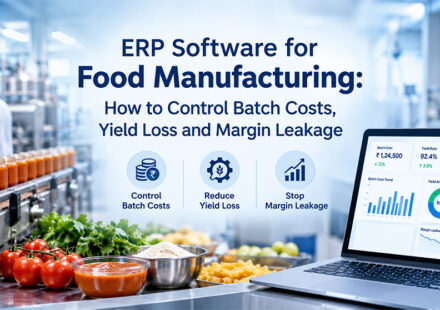
ERP Software for Food Manufacturing: How to Control Batch Costs, Yield Loss and Margin Leakage
For an experienced food manufacturer, profitability rarely disappears because of one major mistake. It usually leaks through hundreds of small production decisions: a raw-material price increase that is not reflected in the product cost, a batch that…
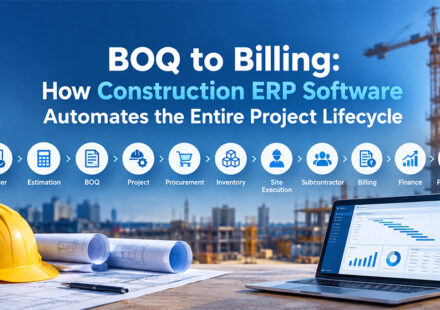
BOQ to Billing: How Construction ERP Software Automates the Entire Project Lifecycle
A construction project can look profitable on paper and still lose money before completion. The problem is rarely one major mistake. Instead, profitability often disappears through small gaps between estimation, BOQ, procurement, inventory, site…
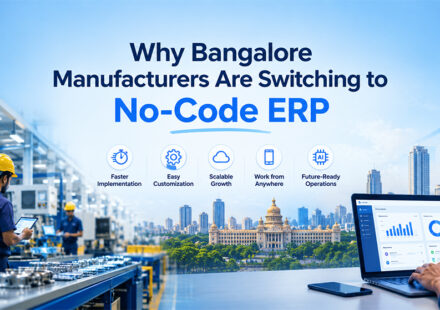
Why Bangalore Manufacturers Are Switching to No-Code ERP
Bangalore’s manufacturing sector is expanding across electronics, engineering, automotive components, machinery, aerospace, food processing, garments, pharmaceuticals, and other industrial segments. However, growth is also exposing a problem that many…
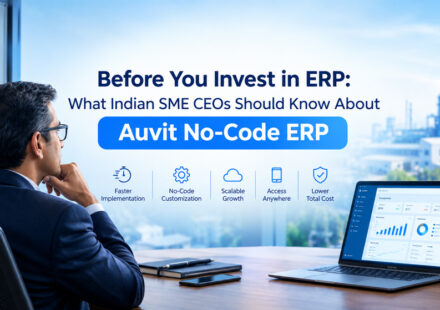
Before You Invest in ERP: What Indian SME CEOs Should Know About Auvit No-Code ERP
Choosing an ERP system is not simply a software purchase. For an Indian SME, it can affect how finance, sales, procurement, inventory, production, projects, HR, customer service, and management reporting work together for years. That is why the real…
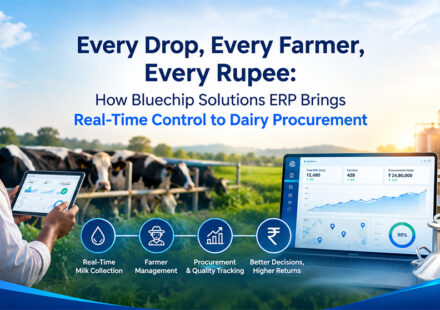
Every Drop, Every Farmer, Every Rupee: How Bluechip Solutions ERP Brings Real-Time Control to Dairy Procurement
Dairy procurement looks simple until the numbers start moving. A dairy business may collect milk from hundreds or thousands of farmers every day. However, behind every litre are collection centres, farmer records, quality tests, fat and SNF measurements,…
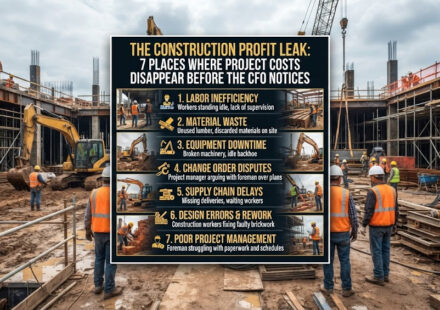
The Construction Profit Leak: 7 Places Where Project Costs Disappear Before the CFO Notices
A construction project can generate strong revenue and still deliver disappointing profit. The problem is often not one dramatic financial mistake. Instead, profitability gradually disappears through small cost variances that remain invisible until the…
Auvit No-Code ERP for Manufacturing: What Should a CEO Expect Before Investing?
A manufacturing ERP investment becomes difficult when the software looks powerful during a demo but becomes restrictive once it reaches the factory floor. Production teams work with changing bills of materials, quality checks, procurement rules,…
The ₹10 Lakh Mistake: How Poor Inventory Control Is Eating Into Food Manufacturing Profits
A food manufacturing company can lose lakhs without experiencing a single major production failure. The leakage often starts much earlier, making Food Manufacturing Inventory Management critical for protecting margins. A raw-material batch may expire in…