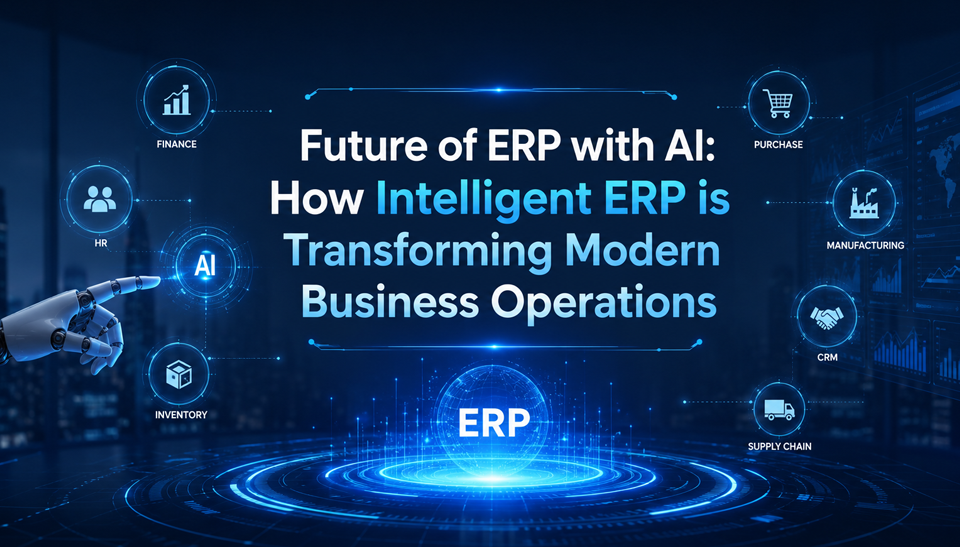

Enterprise Resource Planning (ERP) systems have evolved from simple business management software into intelligent business platforms that help organizations make faster decisions, automate repetitive processes, and improve operational efficiency. While traditional ERP systems centralized business data, the next generation of ERP goes far beyond data management by embedding Artificial Intelligence (AI), Machine Learning (ML), Predictive Analytics, and Intelligent Automation into every business process.
Organizations across manufacturing, retail, healthcare, logistics, construction, finance, education, and service industries are rapidly investing in AI-powered ERP solutions because manual decision-making is no longer sufficient in today’s competitive business environment. Companies now expect ERP software to predict future demand, automate approvals, identify operational risks, recommend actions, and continuously optimize business performance without constant human intervention.
Businesses that continue using conventional ERP platforms often struggle with delayed reporting, manual workflows, inaccurate forecasting, disconnected departments, inventory issues, and slow customer response times. Consequently, these operational challenges directly affect profitability, customer satisfaction, and long-term growth.
The future of ERP with AI addresses these challenges by transforming ERP into an intelligent decision-making platform capable of learning from business data and continuously improving operations.
This comprehensive guide explores how AI is reshaping ERP systems, the technologies driving this transformation, the business benefits organizations can expect, and practical strategies for successfully adopting intelligent ERP solutions.
Why Traditional ERP Systems Are No Longer Enough
ERP software has served organizations well for decades by integrating finance, procurement, inventory, sales, production, and human resources into a unified platform. However, modern businesses generate significantly larger volumes of data than ever before.
As companies expand across multiple locations, channels, suppliers, and customers, manual analysis becomes increasingly difficult. Managers often spend hours preparing reports instead of making informed decisions. Several common challenges continue to affect businesses using traditional ERP systems.
Limited Decision Intelligence
Most conventional ERP systems record business transactions but do not explain why certain trends occur or what actions should be taken next. For example, declining sales may only become visible after monthly reports are generated. By then, the business may have already lost valuable opportunities. AI changes this approach completely by continuously analyzing business activities and providing recommendations before problems become serious.
Manual Business Processes
Many organizations still rely on manual approvals, spreadsheet analysis, repetitive data entry, invoice verification, purchase approvals, and inventory planning. These repetitive activities consume valuable employee time while increasing the risk of human errors. AI-driven ERP automates these routine processes, allowing employees to focus on strategic initiatives rather than administrative tasks.
Inaccurate Demand Forecasting
Forecasting future sales has traditionally depended on historical reports and management assumptions. However, modern markets change rapidly due to customer behavior, seasonal demand, economic conditions, and supply chain disruptions. AI analyzes thousands of variables simultaneously to generate significantly more accurate forecasts.
Slow Decision-Making
Business leaders often wait days or weeks for reports before making operational decisions. AI-powered ERP continuously processes real-time business data and instantly delivers actionable insights, enabling organizations to respond much faster.
What Makes AI-Powered ERP Different?
Artificial Intelligence transforms ERP from a passive record-keeping system into an intelligent business assistant. Instead of simply storing information, intelligent ERP learns from operational data, identifies patterns, predicts future outcomes, and recommends optimal actions. This transformation fundamentally changes how organizations operate. Rather than reacting to problems after they occur, businesses can prevent issues before they impact operations.
How AI Works Inside Modern ERP Systems
Artificial Intelligence is not a single technology. Instead, modern ERP combines several advanced technologies that work together.
Machine Learning Continuously Improves Business Performance
Machine Learning algorithms analyze historical transactions and continuously improve prediction accuracy. As more business data becomes available, the ERP system becomes increasingly intelligent. For example, inventory planning becomes more accurate every month because the system learns from previous purchasing behavior, seasonal trends, customer demand, supplier performance, and market fluctuations. Unlike traditional software, AI continuously improves without requiring complete system redesigns.
Predictive Analytics Enables Proactive Decision-Making
Predictive Analytics helps organizations anticipate future events before they happen. Instead of asking, “What happened last month?” Businesses begin asking, “What is likely to happen next month?” This shift fundamentally improves strategic planning.
For instance, AI can predict:
- Inventory shortages before they occur
- Customer churn risks
- Delayed supplier deliveries
- Equipment failures
- Cash flow shortages
- Seasonal demand increases
- Employee turnover trends
- Sales opportunities
As a result, management gains valuable time to take corrective action.
Natural Language Processing Simplifies ERP Usage
One of the biggest challenges with traditional ERP systems is complexity. Users often spend considerable time searching through multiple dashboards and reports. AI-powered ERP introduces conversational interfaces. Instead of navigating dozens of menus, users can simply ask:
“What were yesterday’s sales?” “Which supplier has delayed deliveries this month?” “Show inventory below reorder level.” “Predict next quarter’s revenue.” The ERP instantly generates intelligent responses, making business information accessible to everyone—not just technical users.
Intelligent Automation Eliminates Repetitive Tasks
Many daily business operations follow predictable workflows. These include:
- Invoice approvals
- Expense verification
- Purchase requests
- Employee onboarding
- Payroll validation
- Vendor management
- Customer follow-ups
AI automatically handles these routine activities based on predefined business rules and historical behavior. Consequently, organizations significantly reduce operational costs while improving processing speed and accuracy.
The Future of ERP with AI Across Every Business Function
Artificial Intelligence is influencing every department within an organization rather than improving only one area.
Finance Becomes Predictive Instead of Reactive
Traditional finance departments focus primarily on recording transactions and generating financial statements. AI transforms finance into a strategic business advisor. Modern ERP solutions can automatically detect unusual spending patterns, predict future cash flow, identify financial risks, automate invoice matching, prevent duplicate payments, and recommend budget adjustments before financial issues arise. Finance teams therefore spend less time preparing reports and more time improving business performance.
Supply Chain Management Becomes Intelligent
Supply chain disruptions continue to challenge businesses worldwide. AI-powered ERP continuously monitors supplier performance, shipping schedules, warehouse availability, transportation costs, and customer demand. Instead of reacting after delays occur, businesses receive early warnings and recommended alternatives. For example, if a supplier consistently delivers products late, the ERP can recommend alternative vendors based on delivery history, pricing, quality, and reliability. This proactive approach minimizes operational disruptions while improving customer satisfaction.
Manufacturing Becomes More Efficient
Manufacturers often struggle with machine downtime, production delays, quality issues, and inaccurate material planning. AI continuously analyzes equipment performance using real-time sensor data, production schedules, and maintenance records. As a result, manufacturers can predict machine failures before breakdowns occur, reducing costly downtime and increasing production efficiency. Additionally, AI optimizes production scheduling by considering workforce availability, machine capacity, customer demand, and raw material inventory simultaneously.
Human Resources Evolves into a Strategic Business Function
Human Resources has traditionally relied on manual processes for recruitment, attendance, payroll, performance management, and employee engagement. Although ERP systems simplified record management, they rarely helped HR teams make proactive decisions. AI-powered ERP changes this by enabling predictive workforce planning and intelligent talent management.
For example, AI can analyze employee performance, attendance patterns, training history, engagement scores, and career progression to identify employees who may be at risk of leaving the organization. Consequently, HR managers can intervene early with personalized retention strategies instead of reacting after valuable employees resign.
Similarly, AI assists recruiters by screening resumes, matching candidates to job requirements, scheduling interviews, and recommending the best-fit applicants based on skills, experience, and cultural alignment. This significantly reduces hiring time while improving recruitment quality.
Furthermore, intelligent ERP platforms help organizations identify skill gaps across departments and recommend customized learning paths for employees. As businesses continue adopting digital transformation, continuous employee development becomes a competitive advantage.
Customer Relationship Management Becomes More Intelligent
Customer expectations continue to rise every year. Organizations can no longer rely solely on responding to customer inquiries after they occur. Instead, businesses must anticipate customer needs before competitors do. AI-powered ERP integrates customer relationship management with sales, finance, inventory, and service operations, providing a complete 360-degree customer view.
Rather than simply recording customer interactions, AI analyzes purchasing history, communication patterns, support tickets, website behavior, and buying frequency. This enables businesses to predict which customers are likely to purchase again, which customers may stop buying, and which products should be recommended based on previous purchasing behavior. Sales representatives therefore receive intelligent recommendations instead of manually analyzing customer data. Additionally, AI-powered chatbots integrated into ERP systems provide instant customer support, reducing response times while improving customer satisfaction. The result is stronger customer relationships, increased repeat business, and higher customer lifetime value.
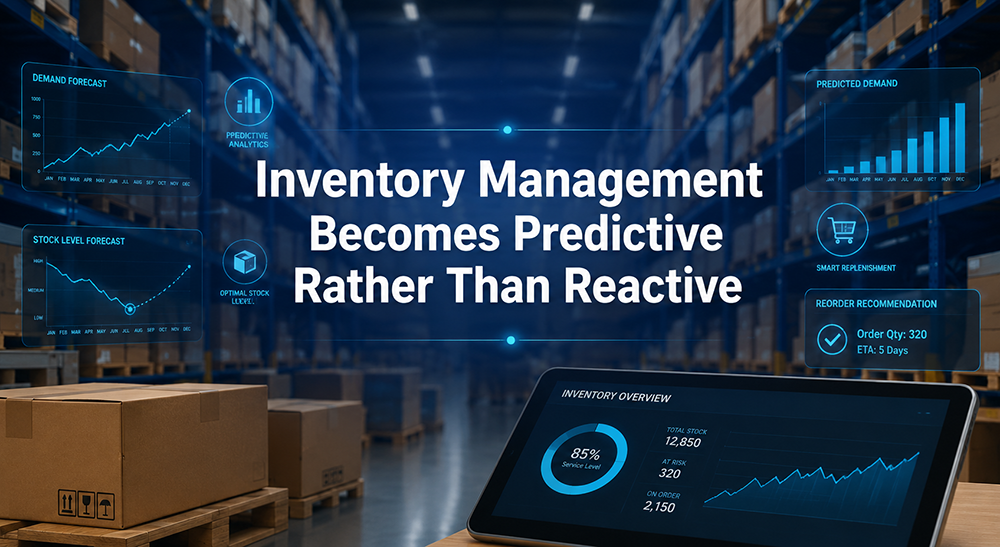
Inventory Management Becomes Predictive Rather Than Reactive
Inventory remains one of the biggest financial investments for many organizations. Unfortunately, poor inventory management continues to cause excessive stock, stock shortages, delayed deliveries, and unnecessary storage costs. Traditional ERP systems typically notify managers only after inventory reaches predefined thresholds. However, AI-powered ERP predicts inventory requirements before shortages occur. By analyzing historical sales, seasonal demand, supplier lead times, production schedules, promotional campaigns, and external market conditions, AI continuously recommends optimal inventory levels.
For example, if demand for a product typically increases during festive seasons, the ERP automatically recommends increasing procurement several weeks in advance. Likewise, slow-moving inventory is identified early, allowing businesses to reduce carrying costs before products become obsolete. This intelligent inventory optimization improves cash flow while ensuring products remain available when customers need them.
Procurement Becomes Smarter and More Cost-Effective
Procurement teams often spend considerable time comparing suppliers, negotiating prices, tracking deliveries, and managing purchase approvals. AI significantly simplifies these activities. Modern ERP solutions evaluate supplier performance using multiple factors including pricing, delivery reliability, product quality, payment history, contract compliance, and service responsiveness.
Instead of selecting vendors based solely on price, AI recommends suppliers that provide the best overall value. Furthermore, AI identifies purchasing patterns across departments and suggests opportunities for consolidated purchasing, reducing procurement costs through volume discounts. Automated approval workflows also eliminate unnecessary delays while maintaining organizational compliance. As procurement becomes more intelligent, organizations reduce operational costs without compromising quality.
AI Agents Are Becoming the New ERP Users
One of the most significant developments shaping the future of ERP is the emergence of AI Agents. Unlike traditional automation, AI Agents can independently perform complex business tasks with minimal human supervision. For example, an AI Procurement Agent can monitor inventory, compare supplier quotations, generate purchase requests, obtain approvals, and place purchase orders automatically.
Similarly, an AI Finance Agent can verify invoices, detect duplicate payments, reconcile accounts, and prepare financial summaries. Sales AI Agents continuously monitor customer interactions and recommend follow-up activities for sales teams. Instead of replacing employees, AI Agents eliminate repetitive administrative work, allowing professionals to focus on innovation, relationship building, and strategic planning.
Industry experts predict that AI Agents will become standard components of enterprise ERP platforms over the next few years. Organizations adopting this technology early will gain a significant competitive advantage.
Generative AI Is Redefining ERP User Experience
Generative AI has introduced an entirely new way of interacting with enterprise software. Rather than searching through dashboards, employees simply ask questions in natural language. Examples include:
“Why did production costs increase this month?” “Predict next month’s sales based on current orders.” “Show suppliers with delivery delays greater than five days.” “Generate a procurement report for the manufacturing department.”
The ERP interprets the request, analyzes relevant business data, and generates detailed answers instantly. This dramatically reduces reporting time while making ERP systems easier for non-technical users. Consequently, organizations achieve greater ERP adoption across departments.
AI Enhances Business Intelligence and Executive Decision-Making
Business leaders require accurate information to make confident decisions. Traditional dashboards often overwhelm executives with static charts and large amounts of historical data. AI-powered ERP transforms Business Intelligence into Decision Intelligence. Instead of simply displaying reports, the ERP explains business trends, identifies root causes, predicts future scenarios, and recommends corrective actions.
For example, if quarterly profits decline, AI may determine that rising logistics costs, increased supplier prices, and declining sales in a specific region contributed to the decrease. More importantly, the ERP recommends actions that could improve profitability. Executives therefore spend less time interpreting reports and more time executing growth strategies.
The Growing Importance of Real-Time Data
Businesses no longer operate in monthly or quarterly cycles. Customer expectations, supply chain conditions, market demand, and operational performance change continuously. Real-time ERP powered by AI enables organizations to monitor every critical business process as it happens. Warehouse managers receive immediate inventory alerts. Finance teams monitor live cash flow.
Production managers track manufacturing efficiency. Sales teams view customer activities instantly. Executives monitor organizational performance through real-time dashboards. This continuous visibility allows organizations to respond quickly to emerging opportunities and operational risks.
AI Improves Compliance and Risk Management
Regulatory compliance continues becoming more complex across industries. Organizations must comply with taxation laws, financial reporting standards, industry regulations, cybersecurity requirements, and environmental policies. AI continuously monitors business transactions for unusual patterns, compliance violations, and operational risks. If suspicious activities occur, the ERP immediately alerts relevant stakeholders. Additionally, AI simplifies internal audits by automatically organizing supporting documents, identifying inconsistencies, and generating compliance reports. Consequently, businesses reduce legal risks while improving governance.
How AI Supports Sustainable Business Growth
Sustainability has become an important business objective rather than a corporate initiative. AI-powered ERP helps organizations reduce waste, improve resource utilization, optimize energy consumption, and minimize environmental impact. Manufacturing companies can monitor machine efficiency to reduce electricity usage. Logistics organizations optimize transportation routes to reduce fuel consumption. Inventory optimization minimizes product wastage. Paperless workflows reduce document printing. These improvements not only reduce operating costs but also strengthen Environmental, Social, and Governance (ESG) initiatives.
Real-World Business Impact of AI-Powered ERP
Organizations implementing AI within ERP platforms consistently report measurable improvements across multiple business functions.
Many enterprises experience significant reductions in manual data entry due to intelligent automation, allowing employees to dedicate more time to strategic work. Forecast accuracy also improves because AI continuously analyzes historical data, market conditions, customer behavior, and operational trends. Customer service teams benefit from faster response times as AI-powered assistants provide instant access to relevant information and automate routine interactions.
Finance departments often complete month-end closing activities much faster through automated reconciliations and intelligent validation processes. Manufacturers achieve higher production efficiency by using predictive maintenance and optimized production scheduling, while procurement teams reduce purchasing costs through AI-driven supplier analysis and demand forecasting.
Although results vary depending on the industry and implementation strategy, organizations adopting intelligent ERP consistently gain better visibility, stronger decision-making capabilities, and improved operational efficiency.
(Next continuation will include: Future ERP trends through 2030, implementation roadmap, common implementation mistakes, E-E-A-T trust section, AEO/GEO optimized FAQs, lead magnet, and a high-converting Bluechip Solutions CTA to complete the 2,300+ word article.)