
Businesses are operating in an environment where speed, flexibility, security, and scalability directly influence growth and competitiveness. As organizations increasingly depend on digital platforms to manage operations, customer interactions, financial transactions, and business intelligence, traditional software infrastructure often struggles to meet evolving demands. Consequently, many organizations are transitioning toward secure cloud-based applications to improve operational efficiency, strengthen cybersecurity, and support long-term business growth.
While digital transformation continues to accelerate across industries, cybersecurity threats are also becoming more sophisticated. Data breaches, ransomware attacks, unauthorized access, and compliance violations can significantly impact business operations and reputation. Therefore, organizations require technology solutions that not only improve productivity but also provide enterprise-grade security and reliability.
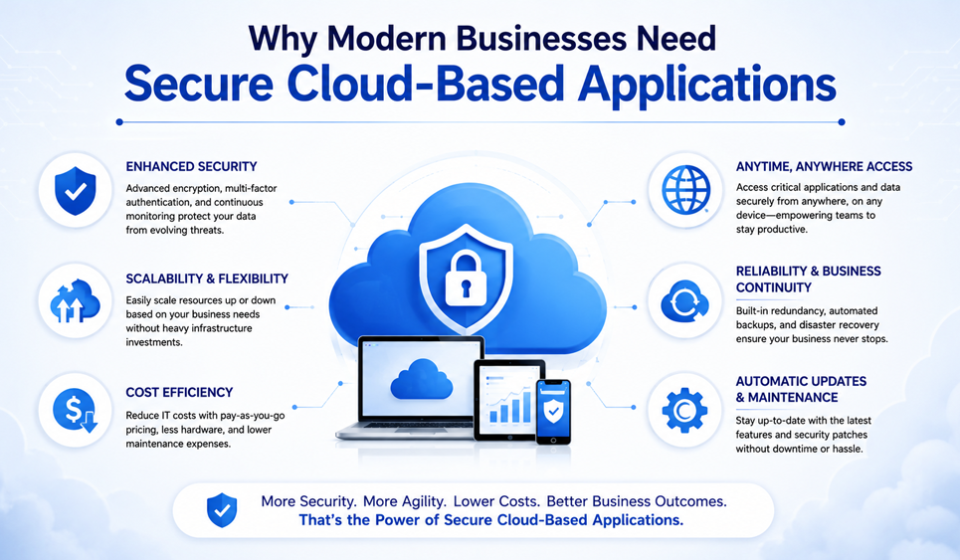
Secure cloud-based applications address these challenges by offering centralized access, advanced security frameworks, real-time collaboration capabilities, and scalable infrastructure. Moreover, modern cloud platforms integrate artificial intelligence, machine learning, automation, and advanced analytics, enabling businesses to make smarter decisions while maintaining data protection and regulatory compliance.
Understanding Secure Cloud-Based Applications
Cloud-based applications are software solutions hosted on remote cloud infrastructure rather than local servers or individual computers. Users access these applications through web browsers or mobile devices, enabling seamless connectivity from virtually anywhere.
However, modern cloud applications go beyond accessibility. They incorporate advanced security mechanisms such as encryption, multi-factor authentication, identity management, threat monitoring, intrusion detection, automated backups, and disaster recovery capabilities.
As a result, businesses gain a secure digital environment that supports operational continuity while minimizing cybersecurity risks.
The Growing Security Challenges Facing Modern Businesses
Organizations across industries face increasing cybersecurity threats that can disrupt operations and compromise sensitive information. Although technology has improved business capabilities, it has simultaneously expanded the attack surface available to cybercriminals.
Rising Cybersecurity Threats
Cyberattacks continue to evolve in complexity and frequency. Attackers target financial systems, customer databases, intellectual property, employee information, and operational infrastructure.
Furthermore, ransomware attacks have become increasingly common because they can immediately disrupt business operations and demand significant financial payments. Consequently, organizations require proactive security strategies rather than reactive approaches.
Secure cloud-based applications provide continuous threat monitoring and automated protection mechanisms that significantly reduce these risks.
Data Silos and Limited Visibility
Many businesses continue to operate with disconnected systems and fragmented databases. As a result, critical information becomes difficult to access, manage, and secure. When data is stored across multiple locations, organizations often struggle to maintain consistent security policies. Therefore, vulnerabilities increase while operational efficiency decreases. Cloud-based applications centralize business information, thereby improving visibility, governance, and security management.
Compliance and Regulatory Pressures
Organizations must comply with industry regulations and data protection standards. Failure to meet compliance requirements can result in substantial penalties, legal issues, and reputational damage. Secure cloud platforms help businesses implement standardized security controls while maintaining audit trails and reporting capabilities that support regulatory compliance.
Why Cloud Security Has Become a Business Priority
Security is no longer solely an IT concern. Instead, it has become a strategic business requirement that directly impacts profitability, customer trust, and operational continuity. Businesses that fail to prioritize cybersecurity often experience financial losses, productivity disruptions, and customer attrition. Conversely, organizations that invest in secure cloud applications build stronger customer relationships and maintain greater operational resilience. Therefore, cloud security plays a critical role in modern business success.
How Secure Cloud-Based Applications Improve Business Operations
Enhanced Accessibility Without Compromising Security
Modern work environments require employees to access business applications from multiple locations and devices. Traditional systems often create accessibility limitations because they rely heavily on on-premises infrastructure. Consequently, remote teams experience productivity challenges and operational delays. Secure cloud applications eliminate these barriers while maintaining strict security controls. Employees can securely access business data through encrypted connections and authenticated sessions. As a result, organizations improve workforce productivity without increasing security risks.
Real-Time Collaboration Across Departments
Business success increasingly depends on collaboration between teams, departments, suppliers, and customers. However, disconnected systems often create communication gaps that delay projects and reduce efficiency. Cloud-based applications enable real-time collaboration by allowing users to access shared information simultaneously. Therefore, teams can make faster decisions and complete projects more efficiently. This capability becomes particularly valuable for organizations managing distributed workforces and global operations.
Automatic Software Updates and Security Patches
Maintaining software security requires continuous updates and vulnerability management. Organizations relying on traditional infrastructure frequently encounter challenges when applying security patches because manual updates consume time and resources. Cloud providers automatically deploy updates and security enhancements across their platforms. Consequently, businesses remain protected against emerging threats without significant administrative effort.
The Role of Artificial Intelligence in Cloud Security
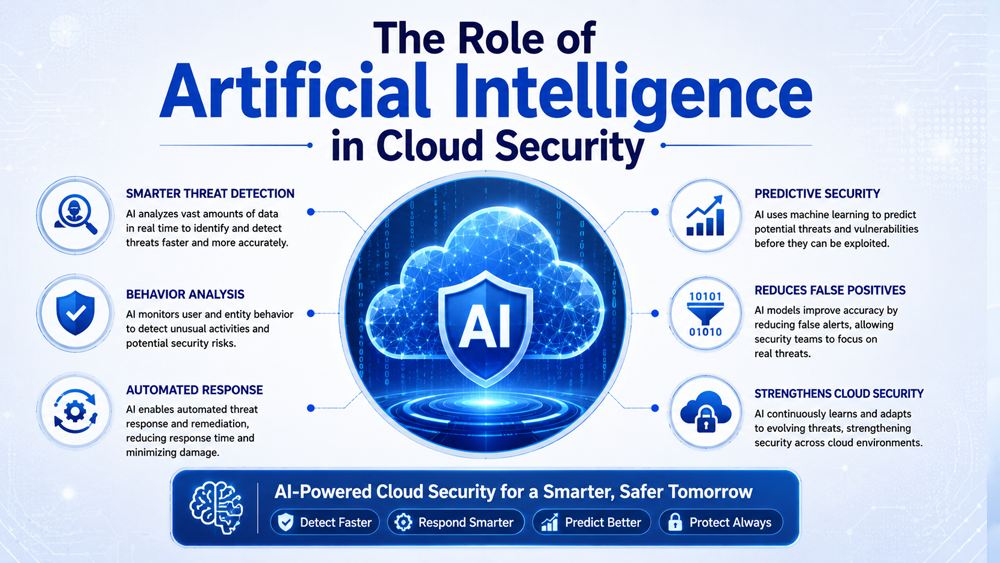
Artificial Intelligence has transformed how organizations detect, prevent, and respond to cybersecurity threats.
AI-Powered Threat Detection
Traditional security systems often struggle to identify advanced threats quickly. AI-driven cloud platforms continuously analyze user behavior, network activity, and system events to identify suspicious patterns. Therefore, potential threats can be detected and addressed before causing significant damage.
Predictive Security Analytics
Machine learning algorithms analyze historical data to predict future risks and vulnerabilities. As a result, organizations can proactively strengthen security controls rather than reacting after incidents occur.
Automated Incident Response
Cybersecurity incidents require immediate action. AI-powered cloud applications automate threat containment, alert generation, and response workflows. Consequently, organizations reduce response times and minimize operational disruption.
Business Continuity and Disaster Recovery Advantages
Unexpected disruptions can significantly impact business operations. Natural disasters, hardware failures, cyberattacks, and human errors can all compromise critical systems and data. Secure cloud applications provide automated backups, redundant infrastructure, and disaster recovery capabilities that ensure operational continuity. Therefore, businesses can recover quickly while minimizing downtime and financial losses.
Scalability That Supports Business Growth
As organizations expand, technology infrastructure must scale accordingly. Traditional systems often require significant investments in hardware, software, and maintenance whenever business demands increase. Cloud-based applications offer flexible scalability that allows businesses to adjust resources based on operational requirements. Consequently, organizations can support growth initiatives without substantial capital expenditures.
Cost Efficiency Through Cloud Adoption
Managing on-premises infrastructure involves ongoing expenses related to servers, maintenance, upgrades, security tools, and IT personnel. Secure cloud applications reduce these costs by shifting infrastructure management responsibilities to cloud providers. As a result, organizations can allocate resources toward innovation, customer service, and strategic growth initiatives rather than infrastructure maintenance.
Strengthening Customer Trust Through Secure Applications
Customers expect organizations to protect their personal and financial information. A single data breach can significantly damage customer confidence and brand reputation. Secure cloud applications implement advanced security measures that help businesses safeguard sensitive information. Therefore, organizations can build stronger customer relationships while demonstrating their commitment to data protection.
Industry-Specific Benefits of Secure Cloud-Based Applications
Manufacturing organizations benefit from secure production management, supply chain visibility, and predictive maintenance capabilities. Healthcare providers improve patient data security, regulatory compliance, and operational efficiency. Retail businesses gain secure e-commerce platforms, inventory visibility, and customer insights. Financial institutions strengthen transaction security, fraud detection, and compliance management.
Construction companies improve project collaboration, document management, and resource planning. Consequently, cloud-based applications deliver measurable value across diverse industries.
Future Trends Driving Cloud Security Innovation
Cloud technology continues to evolve rapidly. Artificial intelligence, zero-trust security frameworks, behavioral analytics, quantum-resistant encryption, and autonomous security operations are expected to shape the future of cloud security. Furthermore, organizations will increasingly adopt integrated platforms that combine cybersecurity, business intelligence, automation, and workflow management within unified cloud environments. These innovations will continue enhancing both security and operational efficiency.
Conclusion
Secure cloud-based applications have become essential for organizations seeking operational agility, cybersecurity resilience, regulatory compliance, and sustainable growth. By centralizing data, enabling secure remote access, supporting real-time collaboration, and integrating advanced AI-powered security capabilities, cloud applications address many of the challenges modern businesses face.
Moreover, organizations that invest in secure cloud infrastructure position themselves for long-term success by improving efficiency, reducing operational risks, strengthening customer trust, and supporting digital transformation initiatives. As cyber threats continue to evolve and business environments become increasingly interconnected, secure cloud-based applications will remain a critical foundation for innovation, productivity, and competitive advantage.
FAQ
Why are secure cloud-based applications important for businesses?
Secure cloud-based applications protect sensitive business data, improve accessibility, support collaboration, and help organizations maintain operational continuity.
How do cloud applications improve security?
They use encryption, multi-factor authentication, threat monitoring, automated backups, and AI-powered security tools to protect information.
Are cloud-based applications suitable for small businesses?
Yes. Cloud applications offer affordable scalability, enterprise-grade security, and reduced infrastructure costs for businesses of all sizes.
How does AI enhance cloud security?
AI improves threat detection, predictive analytics, anomaly identification, and automated incident response capabilities.
What industries benefit from secure cloud applications?
Manufacturing, healthcare, retail, finance, logistics, construction, education, and professional services all benefit from secure cloud-based platforms.