
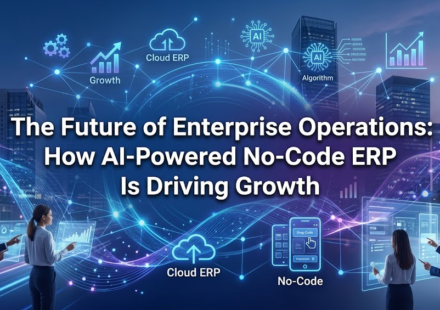
The Future of Enterprise Operations: How AI-Powered No-Code ERP Is Driving Growth
Enterprise growth is no longer determined only by how much a company sells. Increasingly, growth depends on how quickly the business can understand information, respond to change, automate repetitive work, control costs, and make decisions across…
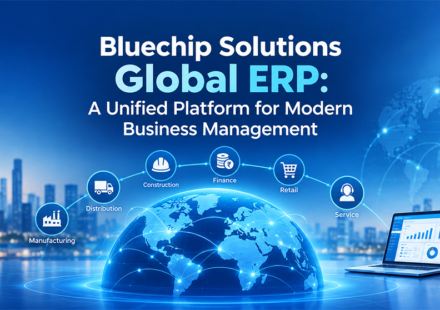
Bluechip Solutions Global ERP: A Unified Platform for Modern Business Management
Business growth often creates a problem that spreadsheets and disconnected software cannot solve: information becomes scattered faster than management can control it. Finance may maintain one system, sales another, production may depend on spreadsheets,…
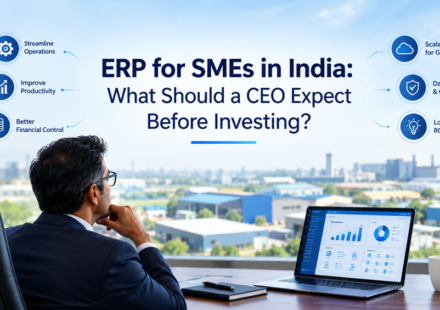
ERP for SMEs in India: What Should a CEO Expect Before Investing?
Choosing an ERP for an SME in India is no longer simply a software purchase. For a CEO, it is a decision about how the company will control finance, inventory, production, sales, purchasing, people, compliance, and business growth without adding…
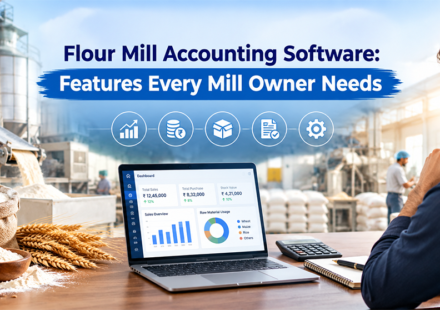
Flour Mill Accounting Software: Features Every Mill Owner Needs
Running a flour mill involves far more than recording sales and expenses. Wheat procurement, stock valuation, milling production, wastage, by-products, customer orders, GST compliance, payments, and profitability all directly influence one another.…
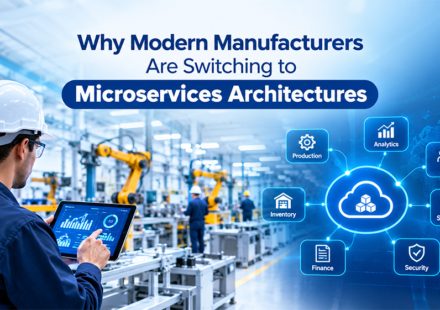
Monolithic vs. Composable ERP: Why Modern Manufacturers Are Switching to Microservices Architectures
A manufacturing company rarely changes its ERP because everything is working perfectly. More often, the problem starts with one department. Production needs real-time visibility. Finance needs accurate costing. Warehouse teams need faster inventory…
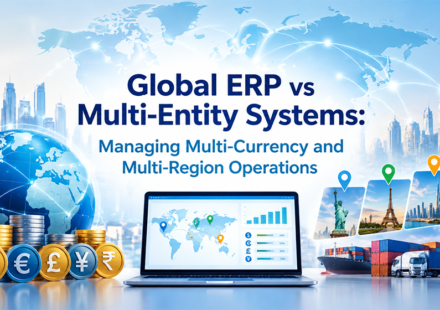
Global ERP vs Multi-Entity Systems: Managing Multi-Currency and Multi-Region Operations
A company can operate in five countries and still struggle to answer a simple question: “What is our actual consolidated financial position right now?” The problem usually is not a lack of accounting software. Instead, it is the growing complexity…
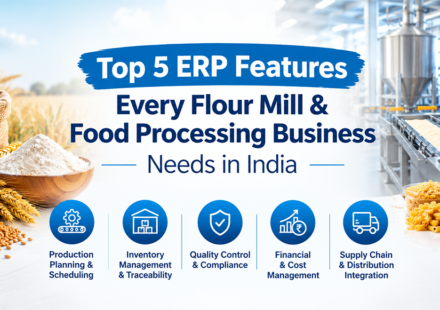
Top 5 ERP Features Every Flour Mill & Food Processing Business Needs in India
A flour mill or food processing business can lose margin without realizing where it happened. Grain prices change, moisture affects yield, production losses vary between batches, inventory sits longer than expected, customer orders change suddenly, and…

Bluechip Solutions: A Global ERP Software for Modern Businesses
Businesses operating across multiple locations, departments, products, currencies, and markets eventually reach a point where spreadsheets and disconnected applications are no longer enough. Finance may maintain one set of numbers, sales may use another…
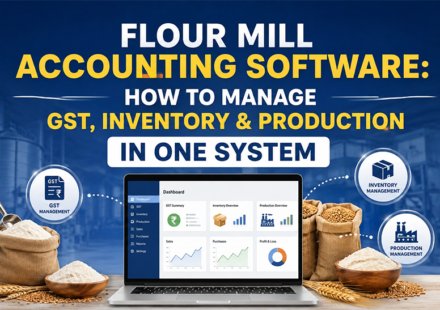
Flour Mill Accounting Software: How to Manage GST, Inventory & Production in One System
Running a flour mill is not simply about buying wheat, processing it and selling flour. Behind every production batch, there are purchasing costs, stock movements, milling losses, by-products, labour expenses, packaging costs, GST calculations, customer…
Construction ERP Software in India: 15 Must-Have Features for Builders & Contractors in 2026
A construction project can look profitable on paper and still lose money during execution. A material purchase may exceed the estimate, labour costs can rise unexpectedly, subcontractor bills may arrive late, or a running-account bill can remain pending…