
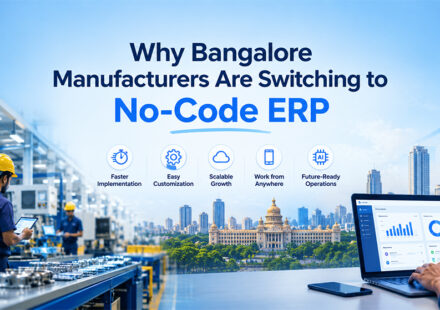
Why Bangalore Manufacturers Are Switching to No-Code ERP
Bangalore’s manufacturing sector is expanding across electronics, engineering, automotive components, machinery, aerospace, food processing, garments, pharmaceuticals, and other industrial segments. However, growth is also exposing a problem that many…
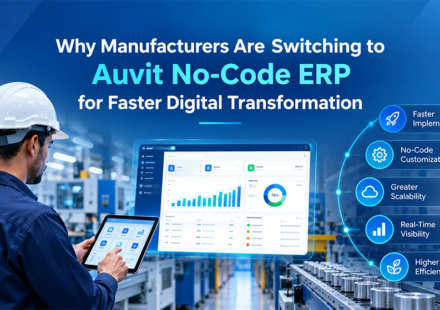
Why Manufacturers Are Switching to Auvit No-Code ERP for Faster Digital Transformation
Understanding the Digital Deadlock in Modern Manufacturing Traditional manufacturing floors run on a complicated mix of legacy systems, disconnected spreadsheets, and rigid software applications that fail to communicate with one another. When material…
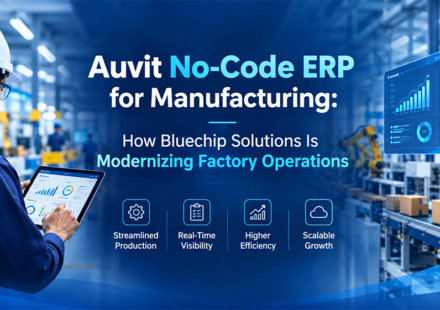
Auvit No-Code ERP for Manufacturing: How Bluechip Solutions Is Modernizing Factory Operations
Manufacturing companies rarely struggle because they lack software. More often, they struggle because the software they already use does not move at the same speed as the factory. Production teams may still depend on spreadsheets for planning. Purchase…
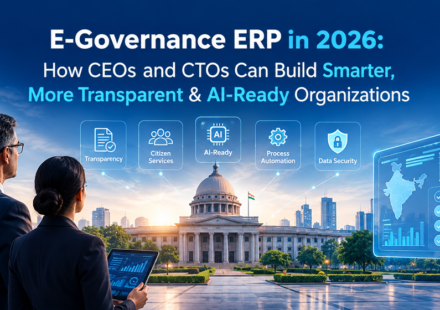
E-Governance ERP in 2026: How CEOs and CTOs Can Build Smarter, More Transparent & AI-Ready Organizations
A CEO does not need another dashboard showing yesterday’s numbers. A CTO does not need another disconnected application that creates another integration problem. What leadership needs is a reliable digital foundation where finance, procurement, human…
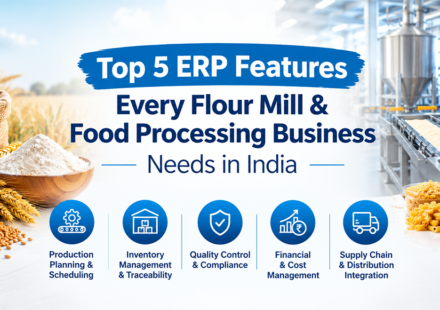
Top 5 ERP Features Every Flour Mill & Food Processing Business Needs in India
A flour mill or food processing business can lose margin without realizing where it happened. Grain prices change, moisture affects yield, production losses vary between batches, inventory sits longer than expected, customer orders change suddenly, and…
What Is Global ERP? Complete Guide to Enterprise Resource Planning for Expanding Businesses
Expanding into multiple cities, states, or countries changes how a business manages finance, inventory, procurement, production, taxation, and reporting. As operations grow across different locations, a global ERP system becomes essential for connecting…
ERP Software Companies in Bangalore: 10 Things to Check Before You Choose One
Choosing among ERP software companies in Bangalore is not simply a matter of comparing features, prices, or software demos. For a growing business, the ERP partner you select can influence financial visibility, inventory accuracy, production efficiency,…
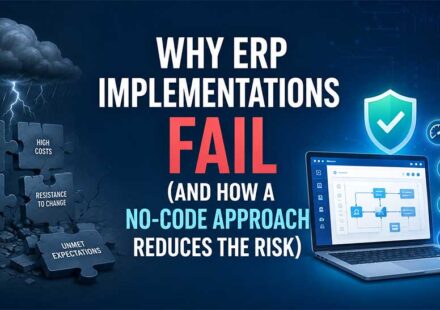
Why ERP Implementations Fail (And How a No-Code Approach Reduces the Risk)
ERP implementation is supposed to bring finance, operations, inventory, sales, purchasing, production, and reporting together. Yet many businesses discover that buying an ERP is easier than making it work. ERP implementation failure can occur when…
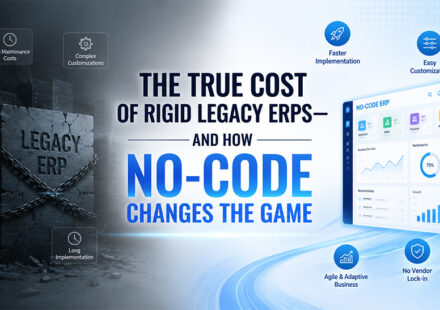
The True Cost of Rigid Legacy ERPs—And How No-Code Changes the Game
A legacy ERP rarely becomes expensive because of its original purchase price. Instead, the real cost appears years later through customization, maintenance, integrations, workarounds, slow reporting, upgrade difficulties, and the growing dependence on…
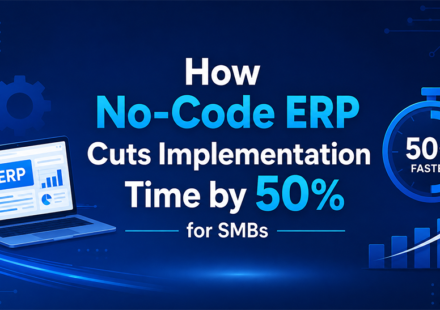
How No-Code ERP Cuts Implementation Time by 50% for SMBs
For a growing SMB, choosing an ERP is only half the decision. The bigger question is how quickly the business can start using it without disrupting sales, finance, inventory, production, purchasing, or customer operations. Traditional ERP implementations…