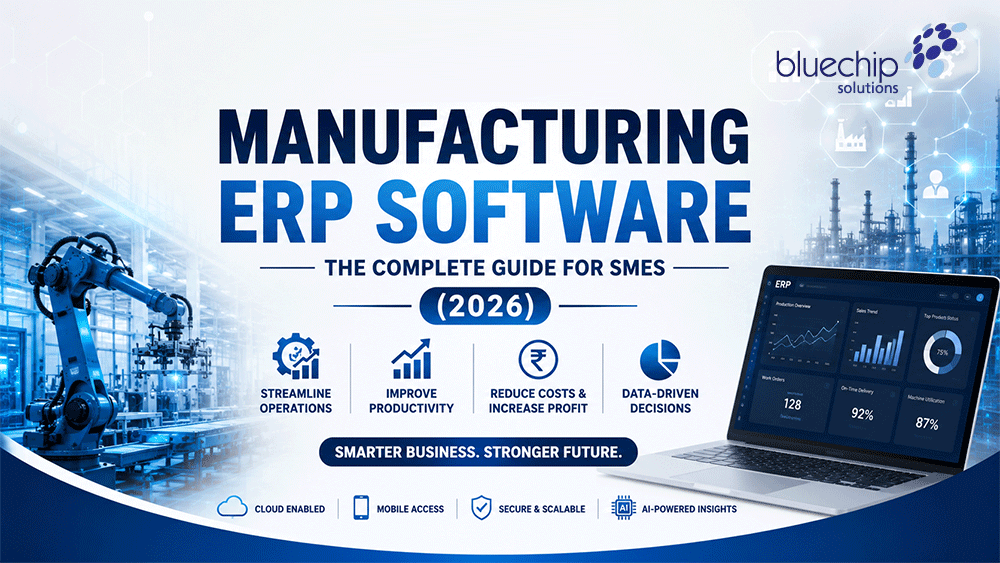

Manufacturing businesses are under constant pressure to deliver faster, reduce production costs, maintain consistent quality, and respond quickly to changing customer demands. However, many small and medium-sized enterprises (SMEs) still rely on disconnected spreadsheets, standalone accounting software, paper-based production records, and manual inventory tracking. While these methods may work during the early stages of business growth, they eventually create operational bottlenecks that slow production, increase errors, and reduce profitability.
A modern Manufacturing ERP (Enterprise Resource Planning) system addresses these challenges by connecting every core business function into a single, integrated platform. Instead of managing production, inventory, procurement, finance, quality control, sales, and human resources separately, manufacturers gain complete visibility across their operations through one centralised system. This enables faster decision-making, improved collaboration between departments, and better control over costs and resources.
As manufacturers continue adopting Industry 4.0 technologies, cloud computing, artificial intelligence (AI), and automation, ERP software has evolved from being a back-office application into a strategic business platform. Organisations that invest in intelligent ERP solutions are better positioned to improve operational efficiency, increase customer satisfaction, and scale sustainably in an increasingly competitive market.
What Is Manufacturing ERP Software?
Manufacturing ERP software is an integrated business management solution designed specifically for manufacturing organisations. It centralises business data and automates critical processes across production planning, inventory management, procurement, sales, finance, warehouse operations, quality assurance, maintenance, and workforce management.
Unlike traditional software that stores information in isolated databases, Manufacturing ERP ensures that every department works with the same real-time information. When a customer places an order, the system immediately checks inventory availability, schedules production, estimates material requirements, updates purchasing, monitors work-in-progress, and records financial transactions automatically. This eliminates duplicate data entry, reduces communication delays, and significantly improves operational accuracy.
For SMEs, this level of integration is especially valuable because limited resources often require employees to manage multiple responsibilities. An ERP system reduces manual workloads, minimises repetitive tasks, and enables teams to focus on production, innovation, and customer service instead of administrative work.
Why Manufacturing SMEs Are Moving Beyond Spreadsheets
Many growing manufacturers begin with spreadsheet-based processes because they are inexpensive and familiar. However, as production volumes increase, spreadsheets become increasingly difficult to maintain and often introduce more problems than solutions.
Production managers frequently struggle with outdated inventory records, procurement teams place duplicate purchase orders, finance departments spend hours reconciling data, and management lacks real-time visibility into business performance. Even a small mistake in inventory or production planning can lead to delayed deliveries, excessive stock, machine downtime, or dissatisfied customers.
These challenges are becoming more significant as customer expectations continue to rise. Buyers increasingly expect accurate delivery schedules, consistent product quality, and rapid order fulfilment. Manual systems simply cannot provide the speed and visibility required to meet these expectations.
Manufacturing ERP eliminates these limitations by creating a single source of truth for the entire organisation. Every transaction updates automatically across departments, ensuring that production schedules, inventory levels, purchase orders, and financial reports always reflect the latest business information.
Common Challenges That Manufacturing SMEs Face
Many manufacturing businesses experience similar operational difficulties regardless of their industry. One of the most common issues is inaccurate inventory management. Excess inventory locks valuable capital into warehouses, while inventory shortages delay production and affect customer commitments. Without real-time inventory visibility, businesses often struggle to maintain the right balance.
Production planning presents another significant challenge. Many SMEs rely on manual scheduling, making it difficult to optimise machine utilisation or respond quickly to urgent customer orders. As a result, production bottlenecks become common, deadlines are missed, and manufacturing costs increase.
Quality management also becomes increasingly complex as production grows. Manual inspection records and disconnected quality systems make it difficult to identify recurring defects or trace production issues back to their source. Consequently, businesses face higher rejection rates, warranty claims, and customer complaints.
Procurement teams often encounter delays because purchasing decisions are based on outdated inventory information. This leads to emergency purchases, higher supplier costs, and interrupted production schedules.
Financial reporting is another area where manual processes create inefficiencies. Accountants spend considerable time collecting information from multiple departments before preparing management reports. By the time reports are completed, the underlying business conditions may already have changed, limiting their usefulness for decision-making.
These operational pain points directly affect profitability, customer satisfaction, and long-term business growth.
How Manufacturing ERP Solves These Business Problems
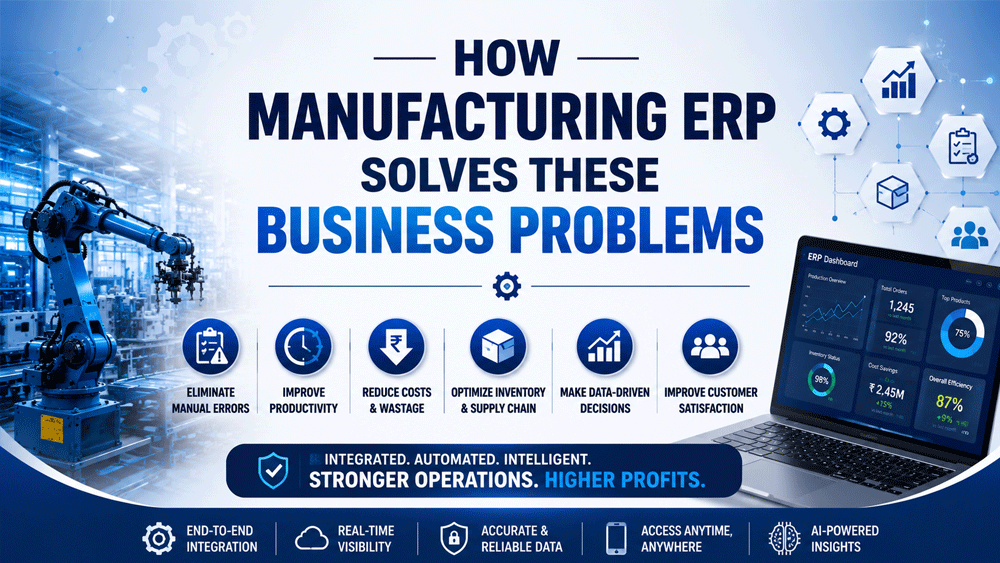
Manufacturing ERP transforms fragmented business operations into an integrated digital ecosystem. Instead of waiting for information to pass between departments, decision-makers gain immediate access to accurate, real-time business data.
When a sales order is created, the ERP system automatically checks available inventory, reserves required materials, calculates production requirements, updates procurement if additional raw materials are needed, schedules manufacturing operations, and generates financial records. Every department works from the same information, eliminating delays caused by manual communication.
Production managers can monitor machine utilisation, work-in-progress, production efficiency, and labour performance from a single dashboard. Inventory managers receive real-time stock updates after every transaction, enabling accurate replenishment planning and reducing unnecessary inventory carrying costs.
Finance teams benefit from automatic integration between operational activities and accounting records. Purchase orders, sales invoices, inventory movements, production costs, and payroll transactions are recorded without duplicate data entry, significantly improving financial accuracy while reducing administrative effort.
Management also gains access to live dashboards that display key performance indicators such as production efficiency, inventory turnover, order status, procurement performance, profitability, and cash flow. These insights support faster, data-driven decisions that improve operational performance.
Key Features Every Manufacturing ERP Should Include
Choosing the right ERP solution requires more than comparing software prices or feature lists. Manufacturing SMEs should focus on capabilities that directly improve operational efficiency and support future business growth.
Production planning should enable businesses to schedule manufacturing activities efficiently while adapting quickly to changing customer requirements. Inventory management should provide complete visibility into raw materials, work-in-progress, and finished goods across multiple warehouses.
Bill of Materials (BOM) management should accurately define product structures and automatically calculate material requirements during production planning. Integrated procurement ensures timely purchasing while reducing excess inventory and supplier delays.
Quality management modules should support inspections throughout the production lifecycle, helping businesses identify quality issues before products reach customers. Warehouse management improves stock accuracy through barcode scanning, batch tracking, and automated inventory movements.
Modern Manufacturing ERP solutions increasingly include Artificial Intelligence capabilities that analyse historical business data, identify production trends, forecast inventory demand, and recommend purchasing decisions. These intelligent features help manufacturers reduce waste, improve forecasting accuracy, and optimise production planning without increasing operational complexity.
Cloud deployment has also become increasingly important because it enables businesses to access ERP securely from any location while reducing IT infrastructure costs and simplifying software updates.
How AI Is Transforming Modern Manufacturing ERP
Artificial Intelligence is no longer a futuristic concept reserved for large enterprises. It has become a practical business tool that helps manufacturing SMEs make faster, more accurate decisions using real-time operational data. Traditional ERP systems primarily record transactions and generate reports, whereas AI-powered ERP analyses those transactions, identifies patterns, predicts future outcomes, and recommends the next best action before problems escalate.
For example, if historical sales data indicates that demand for a particular product increases during a specific season, the ERP system can forecast future material requirements and alert procurement teams to replenish stock in advance. Consequently, businesses avoid production delays caused by material shortages while reducing the risk of overstocking slow-moving inventory.
Similarly, AI can monitor machine performance by analysing production trends, maintenance history, and equipment utilisation. Instead of waiting for machinery to fail unexpectedly, manufacturers receive predictive maintenance alerts, allowing maintenance teams to schedule repairs before costly breakdowns occur. As a result, production downtime decreases, maintenance costs become more predictable, and equipment lifespan improves.
Artificial intelligence also enhances quality management. By analysing inspection records and production parameters, AI identifies recurring defect patterns that may not be immediately visible through manual reporting. Production managers can therefore address root causes early, reducing rejection rates and improving customer satisfaction.
Another significant advantage is intelligent decision support. Business owners no longer need to manually analyse multiple spreadsheets before making strategic decisions. AI-powered dashboards consolidate information from sales, production, inventory, procurement, and finance into meaningful insights that help management respond quickly to changing market conditions.
For manufacturing SMEs operating with limited resources, AI transforms ERP from a reporting tool into a proactive business advisor capable of improving efficiency, reducing operational risks, and supporting sustainable growth.
The Measurable Business Benefits of Manufacturing ERP
One of the primary concerns for SME owners is whether ERP implementation will deliver a measurable return on investment. The answer depends on selecting the right solution and implementing it effectively. When aligned with business processes, Manufacturing ERP provides measurable improvements across almost every operational area.
Manufacturers typically experience better inventory accuracy because every stock movement is recorded automatically. This reduces unnecessary inventory carrying costs while ensuring that production teams always have access to the materials they need. Better inventory visibility also improves purchasing decisions, enabling procurement teams to negotiate more effectively with suppliers and avoid emergency purchases.
Production planning becomes significantly more efficient because schedules are based on real-time capacity, material availability, and customer demand. Consequently, machine utilisation improves, idle time decreases, and production deadlines become more reliable.
Customer service also benefits from integrated ERP systems. Sales teams gain immediate visibility into production status and delivery schedules, allowing them to provide accurate updates instead of relying on estimates. Improved communication strengthens customer trust and increases repeat business.
Financial performance improves because management gains complete visibility into production costs, profitability, and cash flow. Rather than waiting until month-end reports are completed, decision-makers can monitor business performance continuously and respond to challenges before they affect profitability.
Perhaps the greatest benefit is operational transparency. Every department works with the same real-time information, eliminating confusion, reducing manual reconciliation, and improving collaboration across the organisation.
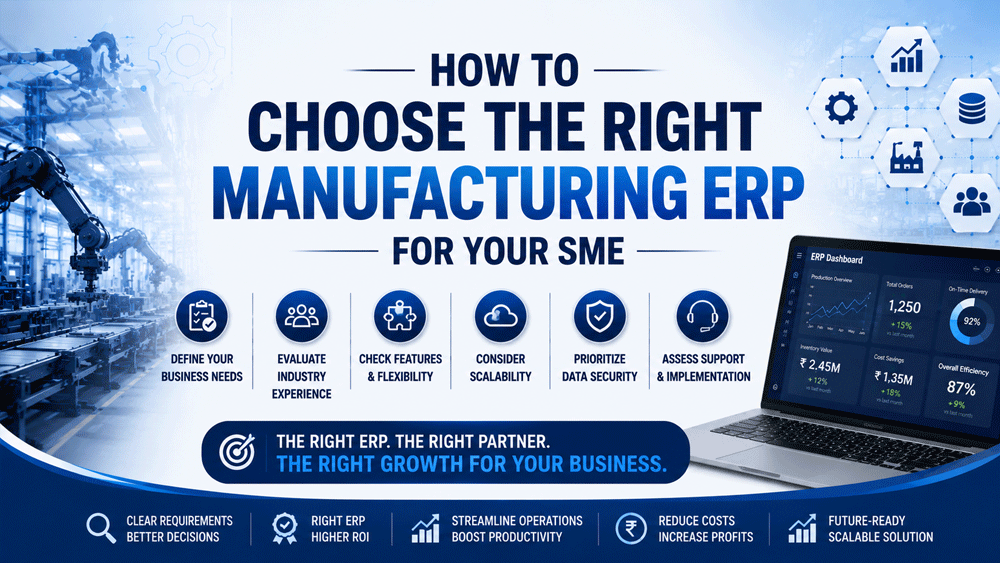
How to Choose the Right Manufacturing ERP for Your SME
Selecting an ERP system should never be based solely on price. While affordability is important, choosing software that cannot adapt to future business growth often results in higher long-term costs through additional customisation, inefficient workflows, or complete system replacement.
Manufacturers should first evaluate whether the ERP solution is designed specifically for manufacturing operations rather than general business management. Industry-specific functionality such as Bill of Materials management, production planning, machine scheduling, batch tracking, quality control, and shop floor monitoring is essential for achieving meaningful operational improvements.
Scalability is equally important. As the business expands, the ERP should support additional users, production facilities, warehouses, and business units without requiring major redevelopment. Cloud-based ERP platforms provide significant advantages in this area because they enable organisations to expand gradually while reducing infrastructure costs.
Flexibility should also be a major consideration. Manufacturing processes differ considerably between industries, and software should adapt to the business rather than forcing the business to adapt to rigid software limitations. Modern no-code ERP platforms allow organisations to modify workflows, forms, approvals, dashboards, and reports without extensive programming, significantly reducing implementation time and future enhancement costs.
Integration capabilities should not be overlooked. A modern ERP should connect seamlessly with accounting systems, CRM platforms, e-commerce websites, barcode scanners, IoT devices, payroll applications, business intelligence tools, and third-party APIs. These integrations eliminate duplicate data entry while creating a connected digital ecosystem.
Finally, evaluate the implementation partner as carefully as the software itself. An experienced ERP provider with manufacturing expertise can guide process improvements, reduce implementation risks, and provide ongoing support that ensures long-term success.
Manufacturing ERP and Industry 4.0: Preparing for the Future
Industry 4.0 is reshaping manufacturing through intelligent automation, connected machinery, data analytics, and digital decision-making. Manufacturing ERP serves as the foundation that connects these technologies into a unified operational platform.
When integrated with Internet of Things (IoT) devices, ERP systems can collect real-time production data directly from machines, enabling accurate monitoring of output, downtime, energy consumption, and equipment performance. Managers receive instant visibility into production efficiency without relying on manual reporting.
Business Intelligence dashboards transform operational data into meaningful performance indicators, helping leadership teams identify production bottlenecks, monitor profitability, and evaluate resource utilisation. These insights support continuous improvement initiatives that increase competitiveness over time.
Cloud connectivity enables manufacturers to access business information securely from production facilities, warehouses, branch offices, or customer locations. This flexibility has become increasingly valuable for organisations managing distributed operations or supporting remote decision-making.
As digital transformation accelerates across manufacturing industries, businesses that continue relying on disconnected manual systems will find it increasingly difficult to compete with organisations that operate through integrated, intelligent ERP platforms.
Why SMEs Should Act Before Operational Challenges Grow
Many businesses postpone ERP implementation until operational issues become impossible to manage. Unfortunately, waiting often increases implementation complexity because inaccurate data, inefficient workflows, and disconnected systems continue to expand alongside business growth.
Implementing ERP at the right stage enables organisations to establish standardised processes before operational complexity becomes overwhelming. Employees adapt more easily, data quality improves, and management gains visibility into business performance much earlier in the company’s growth journey.
More importantly, ERP should not be viewed merely as software. It is a long-term investment in operational excellence, customer satisfaction, and sustainable business growth.
Ready to Modernise Your Manufacturing Business?
If your organisation is still relying on spreadsheets, disconnected software, or manual production tracking, every delay, inventory mismatch, and reporting error represents an opportunity for improvement. A modern Manufacturing ERP solution can help streamline operations, improve production planning, optimise inventory, strengthen financial control, and provide real-time visibility across every department.
Bluechip Solutions offers ProfitPlus Manufacturing ERP, built on the Auvit™ No-Code Platform, enabling manufacturing SMEs to automate workflows, customise business processes rapidly, and integrate AI-powered insights without the complexity of traditional ERP implementations.
Whether you are planning your first ERP implementation or upgrading from legacy systems, the right solution can accelerate digital transformation while delivering measurable business value.
Book a Free ERP Demo and discover how intelligent Manufacturing ERP can help your business reduce costs, improve productivity, and scale with confidence.
Download our Manufacturing ERP Buyer’s Guide to learn how to evaluate ERP solutions, avoid common implementation mistakes, and choose a platform that supports your long-term growth.
Frequently Asked Questions
What is Manufacturing ERP software?
Manufacturing ERP software is an integrated business management system that connects production, inventory, procurement, finance, quality control, warehouse operations, and sales into a single platform, providing real-time visibility and improving operational efficiency.
Is Manufacturing ERP suitable for small and medium-sized businesses?
Yes. Modern cloud-based Manufacturing ERP solutions are designed to scale according to business size, making them cost-effective and practical for SMEs while supporting future growth.
How long does ERP implementation take?
Implementation timelines vary depending on business complexity, data quality, and customisation requirements. A well-planned implementation can often be completed much faster with modern no-code ERP platforms than with traditional ERP systems.
Can Manufacturing ERP integrate with existing software?
Most modern ERP solutions support integration with accounting software, CRM systems, payroll applications, barcode scanners, IoT devices, business intelligence platforms, and third-party applications through APIs.
Does AI improve Manufacturing ERP performance?
Yes. AI enhances forecasting, predictive maintenance, inventory optimisation, production planning, quality analysis, and decision-making by analysing historical and real-time business data, enabling manufacturers to operate more efficiently while reducing operational risks.
Author: Bluechip Solutions ERP Specialists
Experience: More than 26 years of delivering ERP and business automation solutions for manufacturing, construction, distribution, finance, and service industries.