The ₹10 Lakh Mistake: How Poor Inventory Control Is Eating Into Food Manufacturing Profits

A food manufacturing company can lose lakhs without experiencing a single major production failure. The leakage often starts much earlier, making Food Manufacturing Inventory Management critical for protecting margins. A raw-material batch may expire in the warehouse, a slow-moving SKU may occupy valuable storage space, production may use the wrong lot, or procurement may order material based on an outdated spreadsheet. These seemingly small inventory issues can gradually increase waste, carrying costs, production delays, and avoidable financial losses.
For a food manufacturer handling grains, dairy, spices, frozen products, ingredients, beverages or other perishables, inventory is not simply a quantity sitting in a warehouse. It has a shelf life, batch identity, quality status, storage requirement, purchase cost and production purpose.
That is why the frequently discussed ₹10 lakh inventory mistake should be viewed as a practical warning rather than a fixed industry statistic. For a mid-sized manufacturer, several small inventory failures can collectively create a loss of this scale through spoilage, excess purchasing, production inefficiency, stock-outs and working-capital blockage.
The problem is also larger than one company’s warehouse. The FAO estimates that 13.3% of food was lost globally across the supply chain after harvest through processing and wholesale stages in 2023. Therefore, improving inventory visibility is not merely a warehouse efficiency exercise; it directly affects resource utilization and profitability.
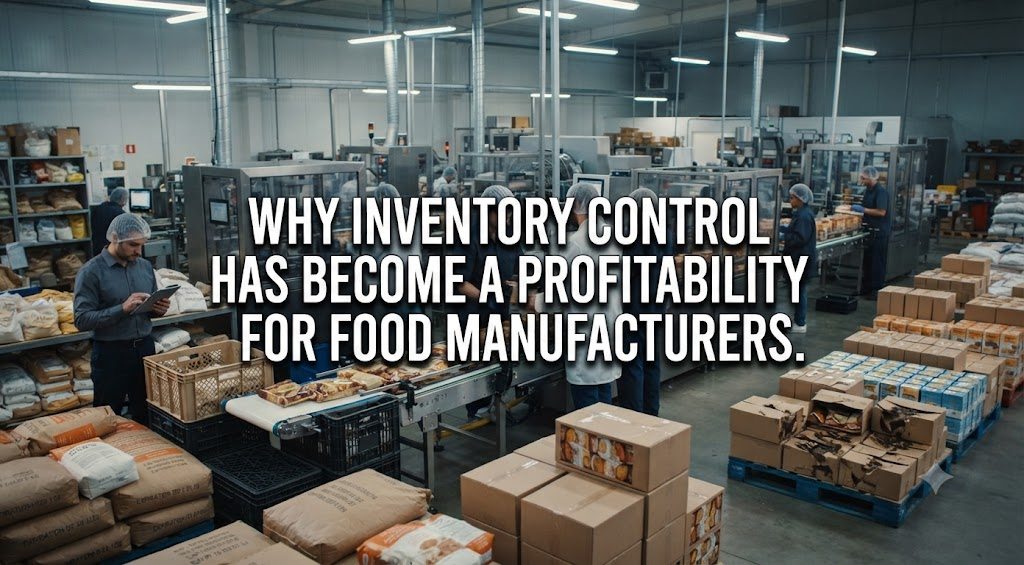
Why Inventory Control Has Become a Profitability Issue for Food Manufacturers
Food manufacturers operate with a difficult combination of variable demand, changing raw-material prices, strict quality requirements and limited product shelf life. Consequently, an inventory decision that appears harmless on Monday can become expensive by Friday.
Suppose a production planner purchases additional raw material because the previous month’s consumption was high. However, customer demand subsequently falls. The material remains in storage longer than expected. If it has a short shelf life, the company may eventually have to discount it, reprocess it or write it off.
The opposite situation can be equally damaging. If procurement underestimates demand, production may run short of a critical ingredient. The plant then faces production delays, urgent purchases, higher procurement costs or missed customer deliveries.
Therefore, the real objective of food manufacturing inventory management is not simply to maintain more stock or less stock. It is to maintain the right material, in the right quantity, at the right location, with the right shelf-life status, at the right time.
How Poor Inventory Control Creates Hidden Losses
The most expensive inventory problems rarely appear as one large accounting entry. Instead, they accumulate across purchasing, warehousing, production and sales.
Expired Raw Materials Turn Working Capital Into Waste
A warehouse may technically show ₹20 lakh worth of raw material, but that does not mean the entire amount is economically useful. If older batches are hidden behind newer receipts, warehouse personnel may issue the newest material first. Over time, older lots approach their expiry dates. Once the material can no longer be safely used, its book value can become a real financial loss.
This is where FEFO, or First-Expired, First-Out, becomes especially important for food manufacturers. Unlike ordinary FIFO, FEFO prioritizes the batch with the earliest expiry date. An effective food inventory system can identify the batch, expiry date, storage location and available quantity before material is issued to production.
Spreadsheet-Based Inventory Creates a Visibility Gap
Spreadsheets remain useful for analysis, but they become increasingly difficult to control when multiple warehouses, production lines, SKUs, suppliers and batches are involved. A stock figure entered manually may already be outdated when another transaction occurs. Meanwhile, purchasing may work from one file, production from another and finance from a third system.
Consequently, management may ask a simple question such as, “How much usable stock do we actually have?” and receive three different answers. That visibility gap creates unnecessary purchases, delayed production decisions and inaccurate working-capital calculations.
Overstocking Quietly Blocks Cash
Excess inventory does not always look like a loss. The warehouse is full. Materials have been purchased. The balance sheet shows an asset. However, cash has already left the business. When slow-moving ingredients and finished goods remain unused, the company carries storage costs, insurance costs, handling costs and the risk of deterioration. In cold-chain operations, the cost becomes even more significant because maintaining temperature-controlled storage consumes additional resources.
Therefore, inventory optimization is also a cash-flow strategy.
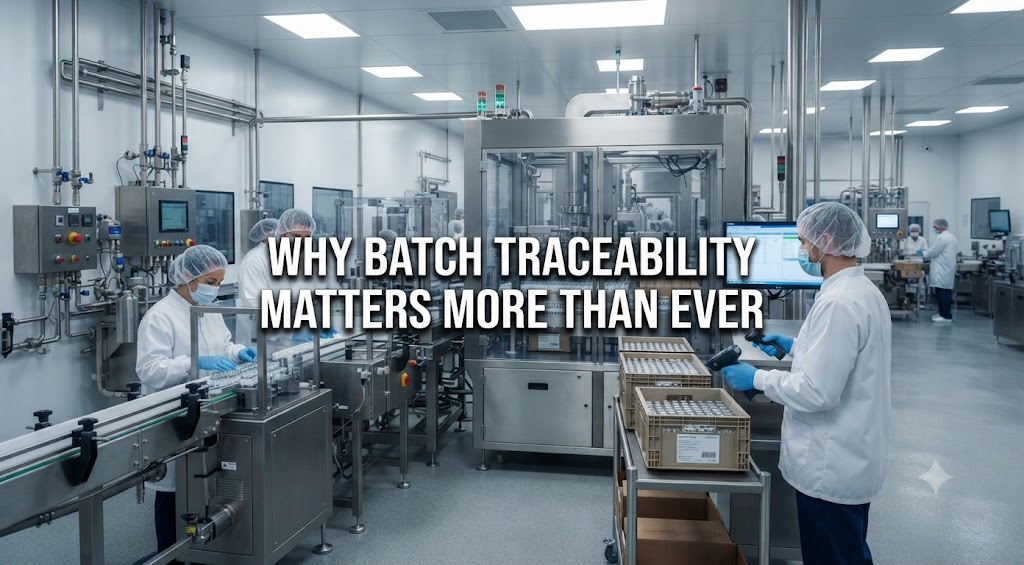
Why Batch Traceability Matters More Than Ever
Inventory control in food manufacturing cannot stop at quantity. Every important batch needs a traceable history covering where the material came from, when it was received, its batch or lot identification, quality status, where it was stored, where it was consumed and, where relevant, which finished products were produced from it.
FSSAI’s framework includes requirements around food businesses and maintains regulations covering food safety, licensing, product standards and related controls. FSSAI also defines batch or lot numbers as identifiers through which food can be traced in manufacture and identified in distribution.
This makes digital traceability particularly valuable when a quality issue, customer complaint or recall investigation occurs. Instead of searching through paper registers and disconnected spreadsheets, management can work backward from a finished batch to its production and material history.
How AI Can Improve Inventory Forecasting in Food Manufacturing
AI does not eliminate the need for experienced planners. Instead, it can help them process far more information than manual spreadsheets can reasonably handle. A practical AI-powered inventory forecasting model can combine historical consumption, sales orders, seasonality, production schedules, supplier lead times, stock levels and other relevant business signals.
A simplified workflow looks like this:
Sales and inventory data → demand forecasting → inventory risk detection → replenishment recommendation → production planning → continuous feedback
For example, a time-series forecasting model can identify recurring seasonal demand. A machine-learning model can incorporate multiple variables and identify relationships that are difficult to see through simple averages. An anomaly-detection model can then highlight unusual consumption or unexpected stock movements.
The important point is that AI should support operational decisions rather than blindly automate them. A planner should still be able to review why the system is recommending additional procurement. If demand suddenly increases, the system should show the relevant business signals rather than simply producing an unexplained number.
AI-Powered Reordering Can Reduce Reactive Procurement
Traditional procurement often follows a simple question: “How much stock do we have?” Modern inventory planning needs a better question: “How much usable stock will we need before the next replenishment arrives?”
That difference matters. An AI-enabled ERP can consider current usable inventory, pending purchase orders, production requirements, expected demand, supplier lead time and safety-stock rules. For instance, if a critical ingredient has a 15-day supplier lead time and projected consumption is increasing, the system can identify a potential shortage before the warehouse reaches zero.
Likewise, if projected demand is falling while inventory remains high, management can investigate whether procurement should be delayed. This transforms inventory management from a reactive process into a forward-looking planning process.
Connecting Inventory With Production Is the Missing Link
Inventory software creates far more value when it is connected with production planning. Consider a manufacturer preparing next week’s production schedule. The system should not only know the planned production quantity. It should also determine whether the required ingredients are available, whether the correct batches are usable, whether any materials are approaching expiry and whether procurement needs to be triggered.
This connection helps prevent a common manufacturing problem: material exists in the warehouse, but the required usable material is unavailable for production. For food manufacturers, quantity alone is therefore an incomplete inventory metric.
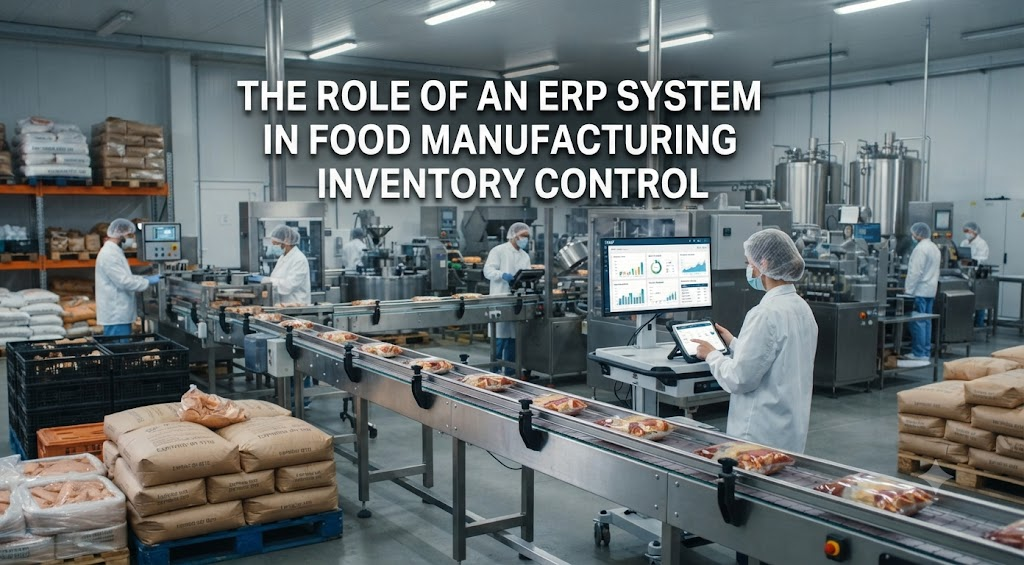
The Role of an ERP System in Food Manufacturing Inventory Control
A food-focused ERP can connect procurement, inventory, production, sales, quality, finance and reporting within one operational environment. Instead of maintaining separate records, the organization can create a connected transaction flow from purchase receipt to warehouse storage, production consumption, finished-goods creation and customer dispatch.
Barcode or mobile-based transactions can further reduce manual data entry. Batch and expiry information can be captured at receiving. Warehouse teams can then use those records when issuing materials. Most importantly, management receives a common operational view.
This does not mean that implementing ERP automatically eliminates waste. The system must reflect the manufacturer’s actual processes, inventory policies, approval controls and warehouse practices. However, when the process and technology are aligned, decision-making becomes significantly more structured.
What Food Manufacturers Should Measure
A useful inventory-control strategy should connect operational metrics with financial outcomes. Inventory accuracy tells management whether system quantities reflect physical stock. Inventory turnover shows how efficiently working capital moves through the business. Days of inventory indicates how long stock is being held. Meanwhile, expiry-related write-offs reveal how much value is being lost because materials are not consumed within their usable window.
Manufacturers should also monitor stock-out frequency, slow-moving inventory, batch-level ageing, forecast accuracy and purchase-price variations. The purpose is not to create more reports. Instead, these measurements should help management identify where money is getting trapped or lost.
Why Manual Inventory Control Eventually Reaches Its Limit
A small manufacturing operation may initially manage inventory through spreadsheets, physical registers and manual approvals. However, complexity increases as the company adds products, locations, suppliers, production lines and customers. At that stage, the problem is no longer simply “data entry.”
The larger issue is that decisions are being made from information that may be incomplete, delayed or disconnected. That is where an AI-ready no-code ERP and business process automation platform can provide a practical alternative. Processes can be digitized, workflows can be automated and business information can be connected without forcing every operational change through a lengthy traditional development cycle.
For a growing food manufacturer, that flexibility can be particularly useful because inventory processes often change as product lines, warehouses and compliance requirements evolve.
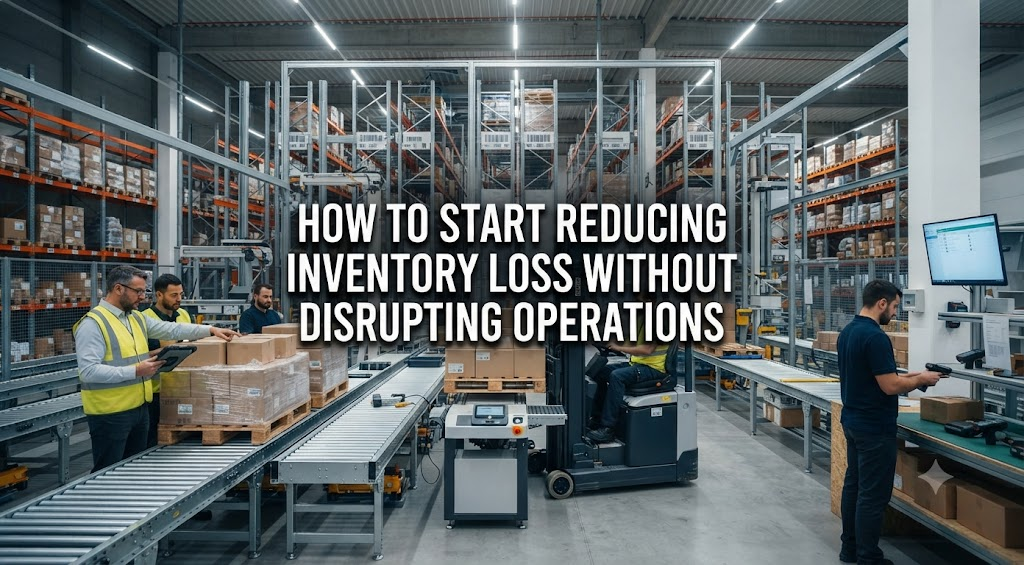
How to Start Reducing Inventory Loss Without Disrupting Operations
The first step is not buying software. It is identifying where inventory value is actually disappearing. Start by comparing physical inventory with system inventory. Then examine expired and near-expiry materials, slow-moving SKUs, emergency purchases, stock-outs and production stoppages caused by material shortages.
Next, map how a material moves from supplier receipt to production and finally to finished-goods dispatch. Once these gaps are visible, the manufacturer can determine where barcode capture, FEFO controls, automated alerts, approval workflows, demand forecasting or ERP integration will create measurable value.
This approach is more sustainable than simply adding another spreadsheet to an already complicated process.
The ₹10 Lakh Question: How Much Is Your Inventory Really Costing You?
The most important question is not whether your warehouse contains ₹10 lakh, ₹50 lakh or ₹5 crore worth of inventory. The better question is: How much of that inventory is genuinely usable, correctly valued, traceable, required for upcoming production and likely to be consumed before expiry?
That distinction can expose the real cost of poor inventory control. Global evidence shows that food loss remains a substantial supply-chain challenge, while India’s Ministry of Food Processing Industries continues to maintain technical studies on post-harvest losses, cold-chain infrastructure and food-processing-sector requirements.
For manufacturers, the opportunity is therefore practical: improve visibility, strengthen batch-level control, connect inventory with production and use predictive analytics where it adds genuine decision-making value.
Frequently Asked Questions About Food Manufacturing Inventory Control
What is inventory control in food manufacturing?
Inventory control in food manufacturing is the process of managing raw materials, packaging materials, work-in-progress and finished goods while controlling quantity, batch, expiry, quality status, location and movement. The objective is to maintain sufficient usable inventory without creating unnecessary waste or working-capital blockage.
Why is FEFO important for food manufacturers?
FEFO, or First-Expired, First-Out, prioritizes materials according to their expiry dates. It is particularly useful for perishable and shelf-life-sensitive products because it helps prevent older usable batches from being overlooked while newer stock is consumed.
Can AI predict food manufacturing inventory requirements?
AI can support inventory forecasting by analyzing historical consumption, sales patterns, seasonality, production requirements, supplier lead times and other available business data. However, forecast quality depends on data quality, model design and appropriate human review.
What does food inventory software help with?
Food inventory software can help manufacturers manage stock levels, batches, expiry dates, warehouse movements, procurement, material consumption, traceability and reporting. When integrated with ERP and production processes, it can provide a more connected view of inventory and operations.
How can ERP reduce food manufacturing inventory problems?
An ERP system can connect procurement, inventory, production, sales and finance so that transactions are recorded within a common operational process. With batch tracking, FEFO controls, workflow automation, dashboards and forecasting capabilities, management can identify inventory risks earlier and make more informed decisions.
Turn Inventory Visibility Into a Manufacturing Advantage
If your team still spends hours checking spreadsheets to determine what is actually available, which batch should be consumed next, or why inventory does not match production requirements, the problem is bigger than stock counting. It is a visibility and decision-making problem.
Bluechip Solutions can help food manufacturers explore ERP-based inventory, production and business process automation designed around their operational requirements.
Book a Free ERP Consultation to discuss your current inventory workflow, identify potential control gaps and evaluate how a connected ERP approach can improve visibility across procurement, warehouse and production operations.
Get the “Food Manufacturing Inventory Control Checklist” and assess your batch tracking, FEFO, expiry management, stock accuracy, procurement planning and production visibility before the next inventory loss reaches your profit statement.